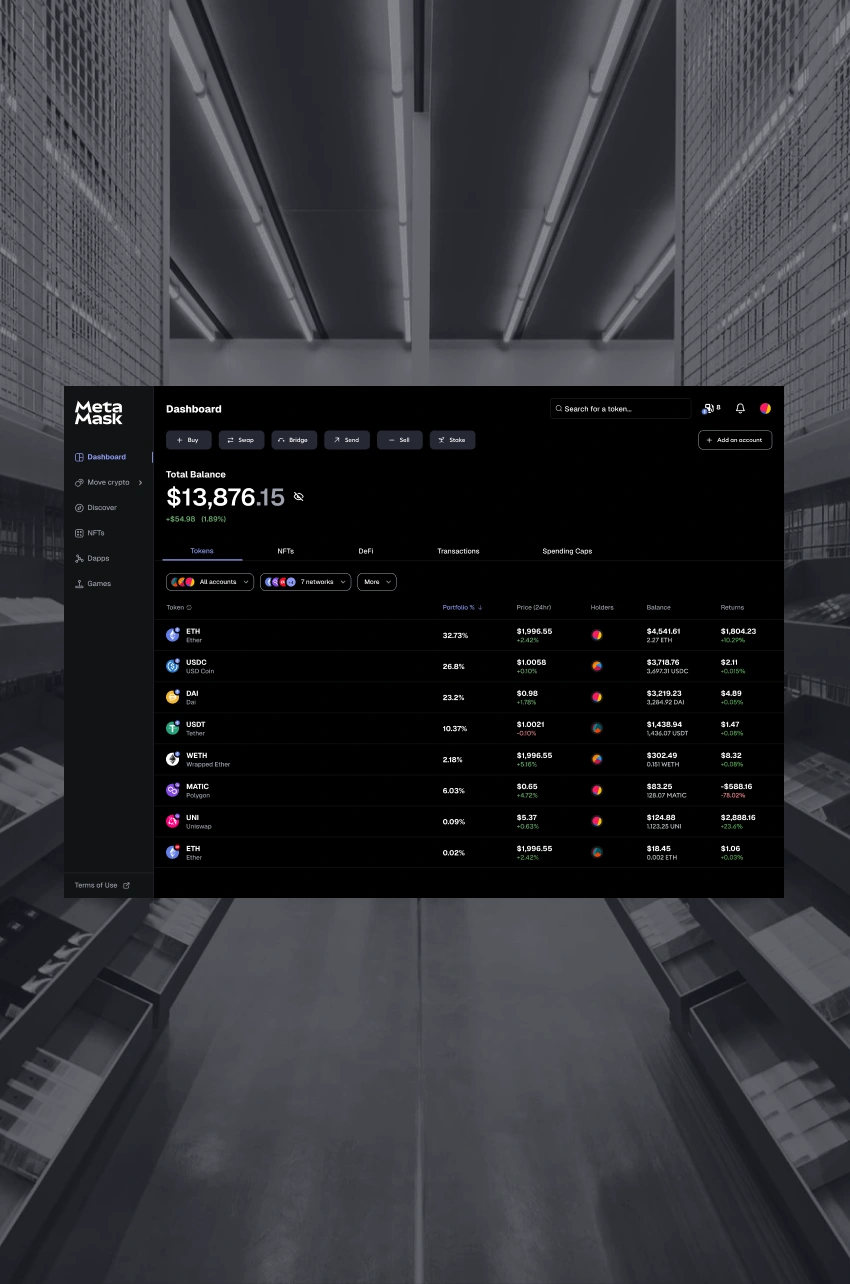
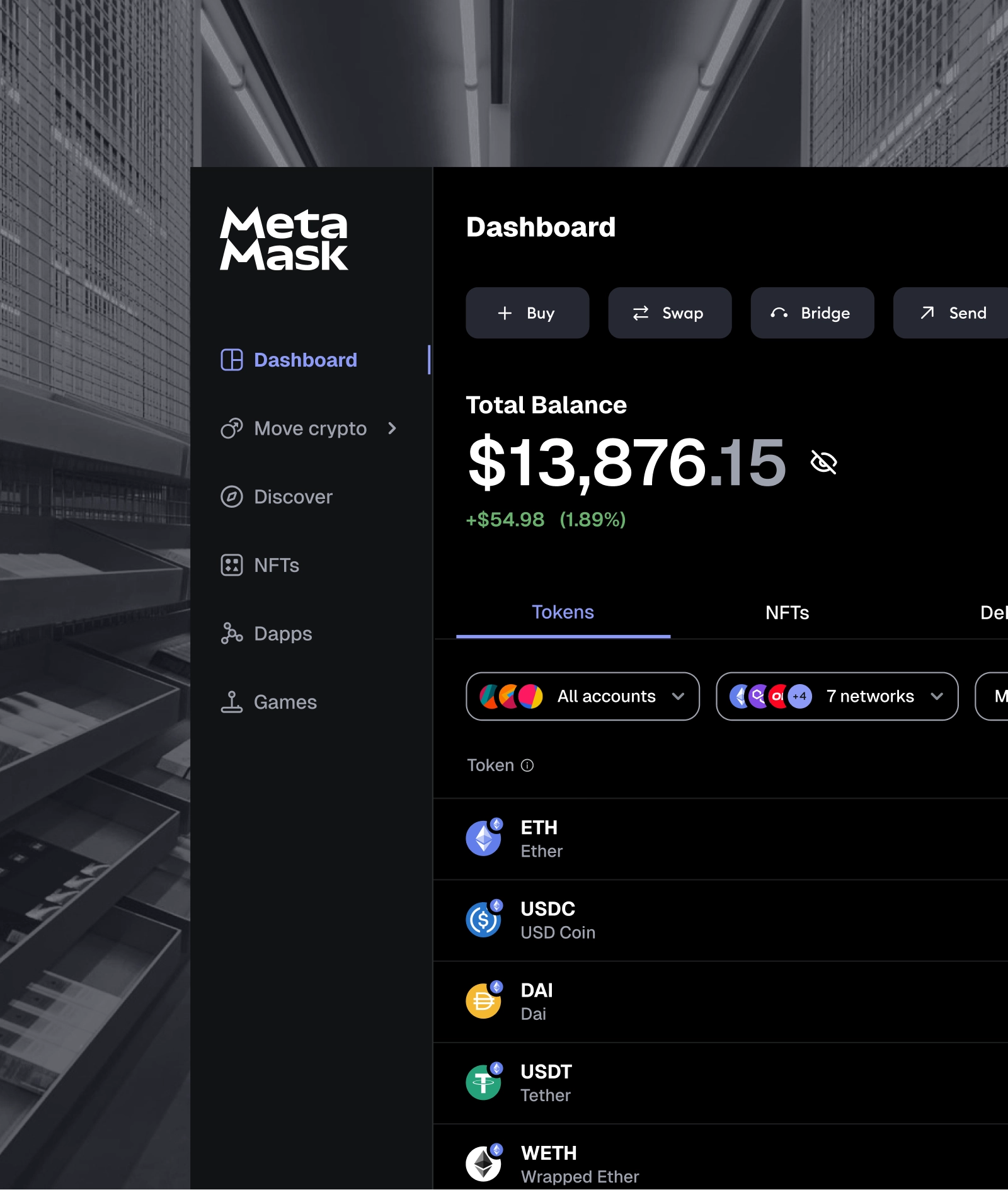
During my time at MetaMask, I led the design of Buy & Sell across mobile and desktop while helping shape the extension experience through cross-platform design direction. The product connected users with third-party providers to purchase and sell digital assets, each operating under different regional, financial, and compliance requirements. My work focused on creating scalable systems that balanced provider flexibility, user trust, and a consistent experience across markets.
Metamask
Buy & Sell
METAMASK buy & Sell
Designing and scaling one of the world's largest self-custody transaction experiences.
ROLE
PRODUCT DESIGN LEAD
Scale
30M+ MONTHLY ACTIVE USERS ACROSS GLOBAL MARKETS
Timeline
~3 years
Platforms
WEB, MOBILE (IOS & ANDROID)
Focus
GLOBAL PAYMENTS, TRANSACTION UX, FINANCIAL UX
Team
PRODUCT DESIGN, PRODUCT MANAGEMENT, ENGINEERING, RESEARCH, CONTENT DESIGN
Responsibilities
PRODUCT STRATEGY, UX, UI, RESEARCH, PROTOTYPING, OPTIMIZATION
The Challenge
What appeared to users as a single transaction was shaped by a complex set of regional, provider, payment, and regulatory variables behind the scenes. The challenge was designing a system flexible enough to accommodate that complexity while delivering one clear and consistent experience.

A SIMPLE ACTION COULD TAKE MANY DIFFERENT PATHS
Buy & Sell connected users to third-party providers with different payment methods, fees, limits, processing times, and requirements across markets. What worked for one user might not even be available to another. The challenge was making all of those different paths feel like the same MetaMask experience, while giving users the information they needed to make a confident decision.
DEFINING THE DIRECTION
What appeared to users as a single transaction was shaped by a complex set of regional, provider, payment, and regulatory variables behind the scenes. The challenge was designing a system flexible enough to accommodate that complexity while delivering one clear and consistent experience.
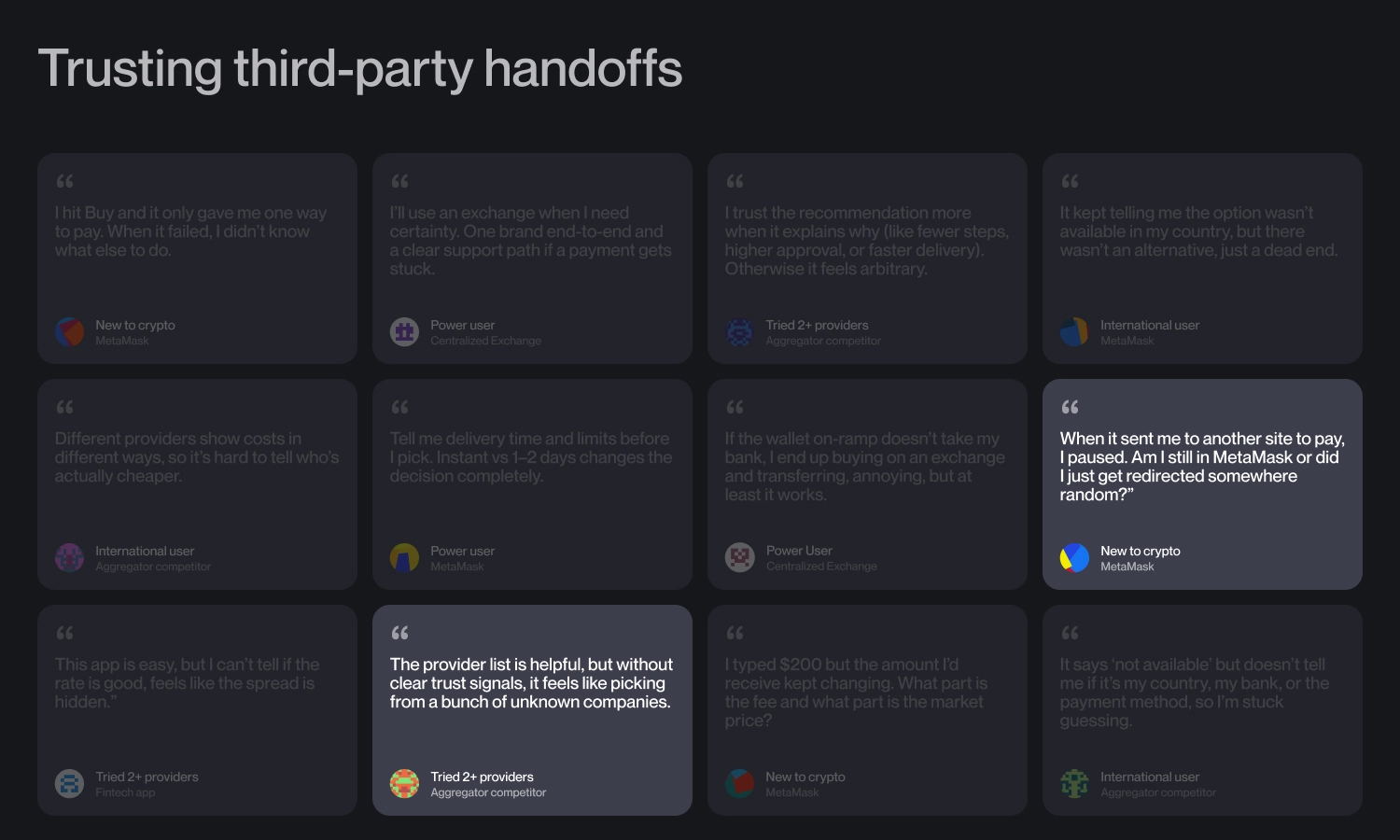
THE SAME NEEDS KEPT SHOWING UP
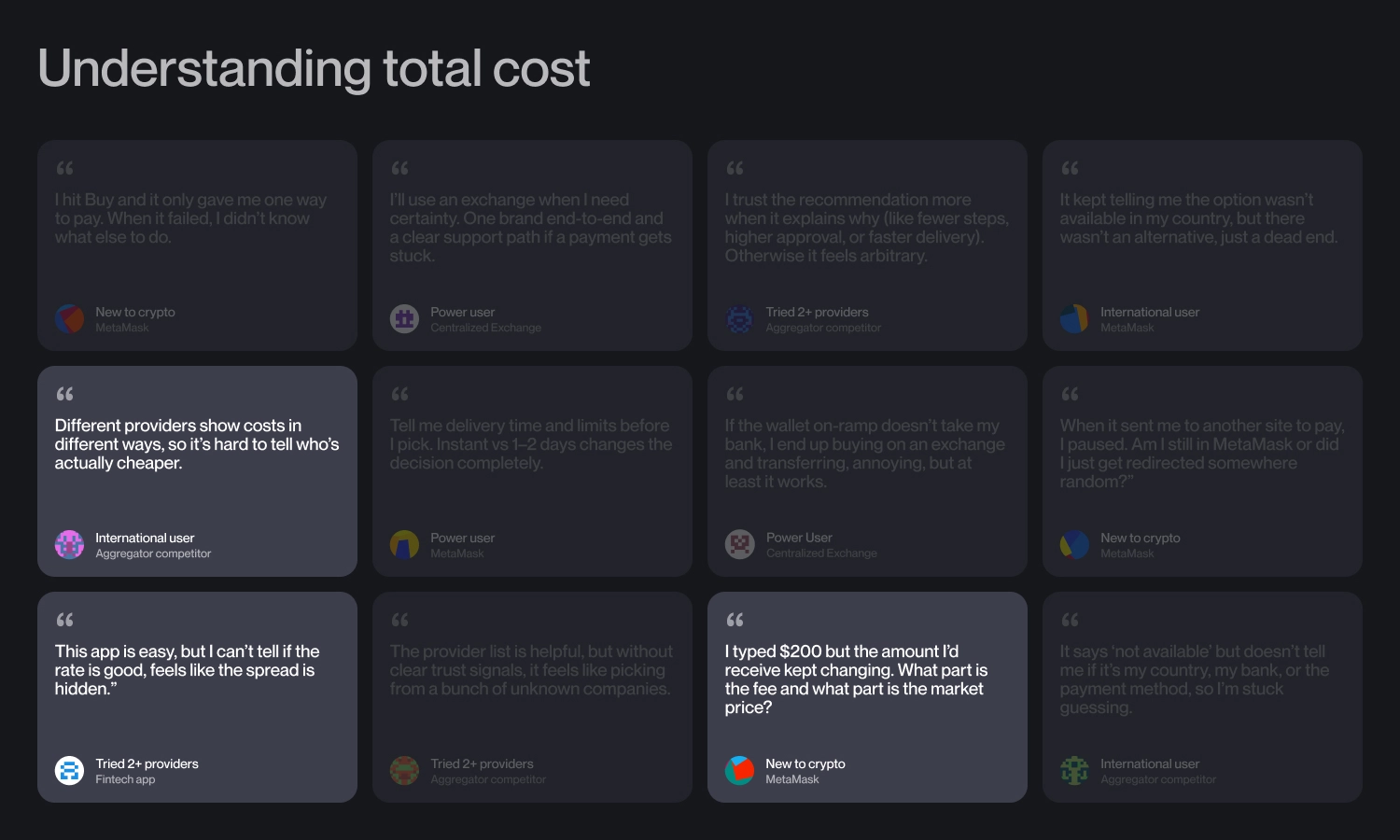
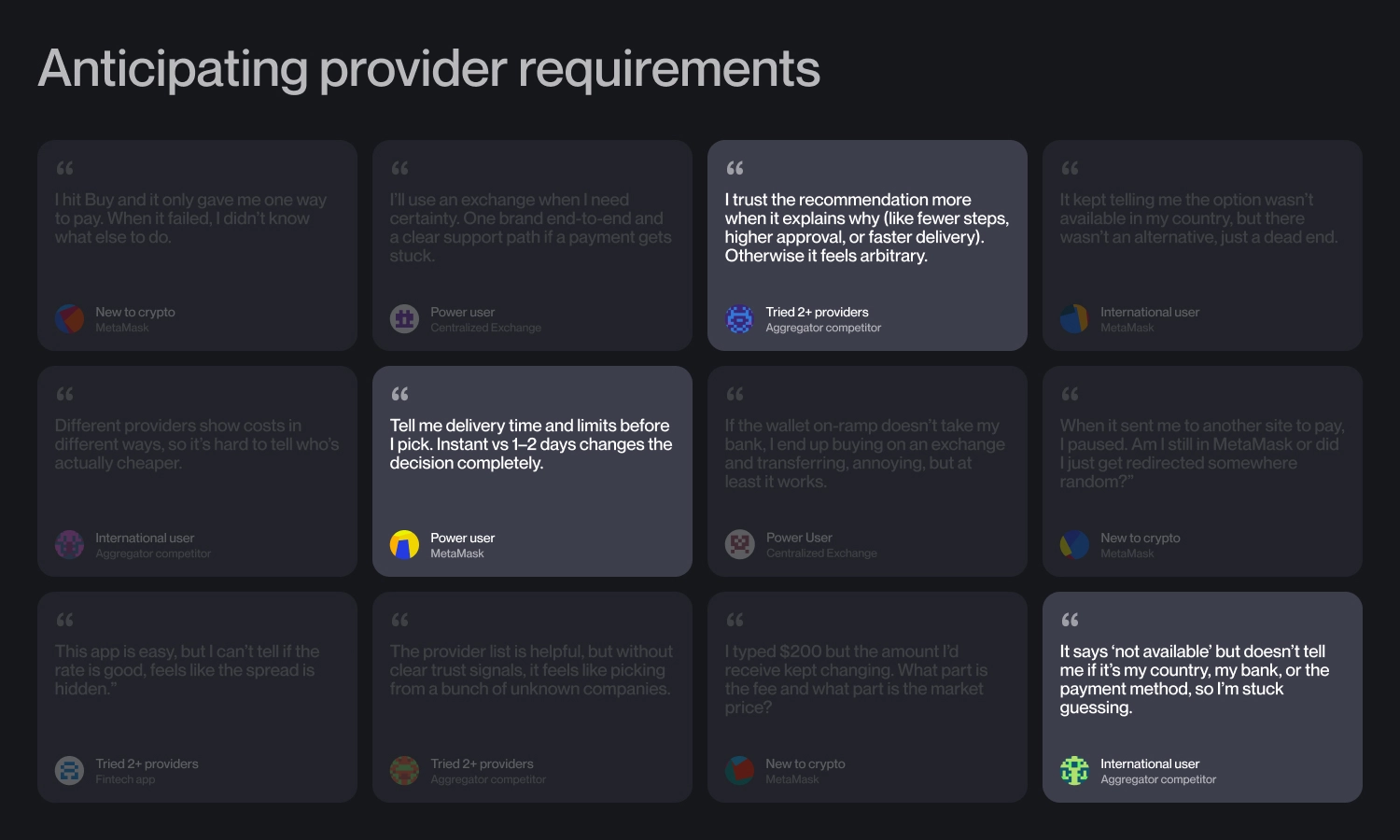
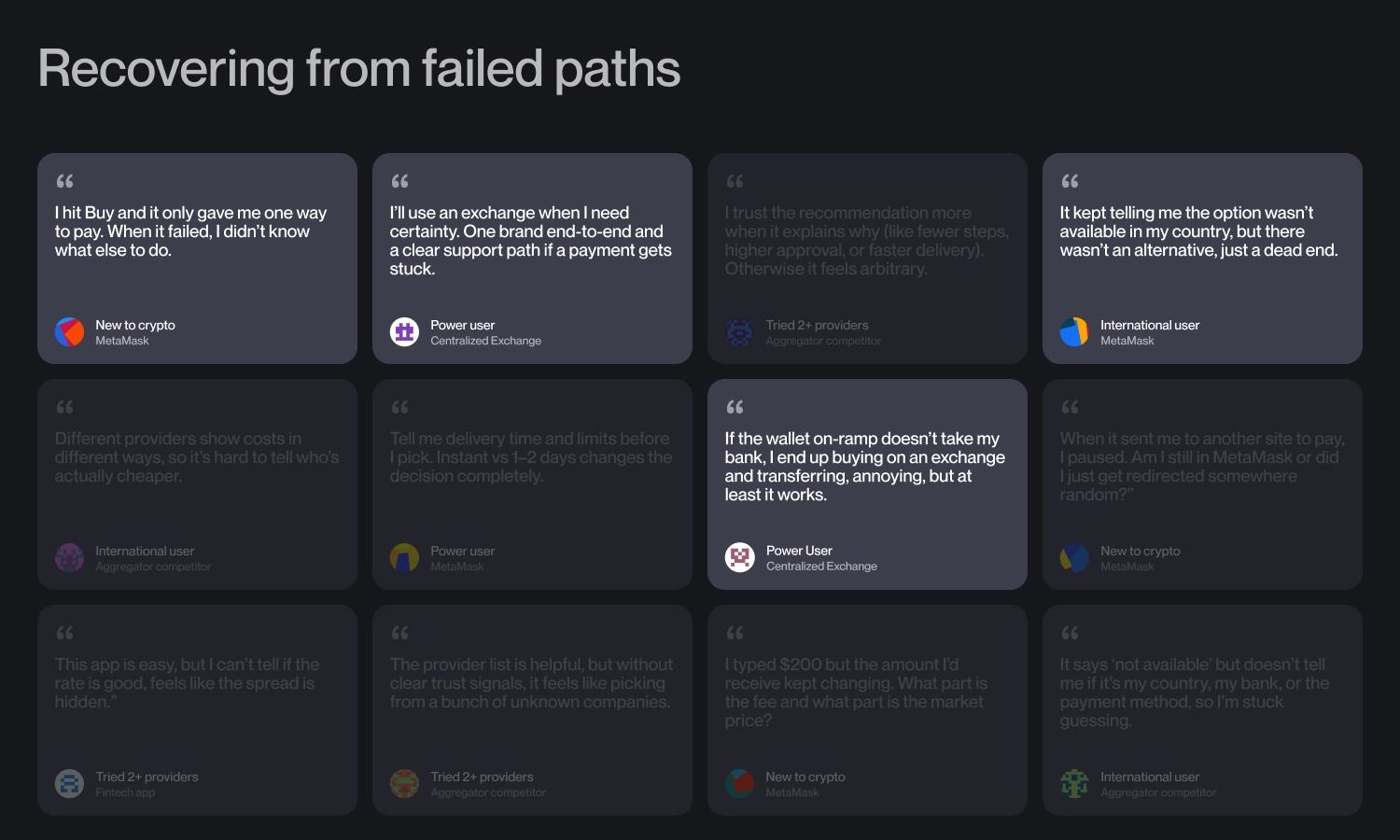
We intentionally spoke with people across the crypto spectrum, from first-time buyers to experienced users who regularly used MetaMask, centralized exchanges, and other crypto products. Participants came from key markets including the United States, United Kingdom, Canada, Brazil, and Nigeria, giving us a mix of experience levels, purchasing habits, and regional needs. We wanted to understand not only how people bought crypto, but how they compared their options, decided which providers to trust, and responded when a purchase didn’t go as expected. Despite their differences, the same four concerns kept coming up: understanding total cost, anticipating provider requirements, recovering from failed paths, and trusting third-party handoffs.
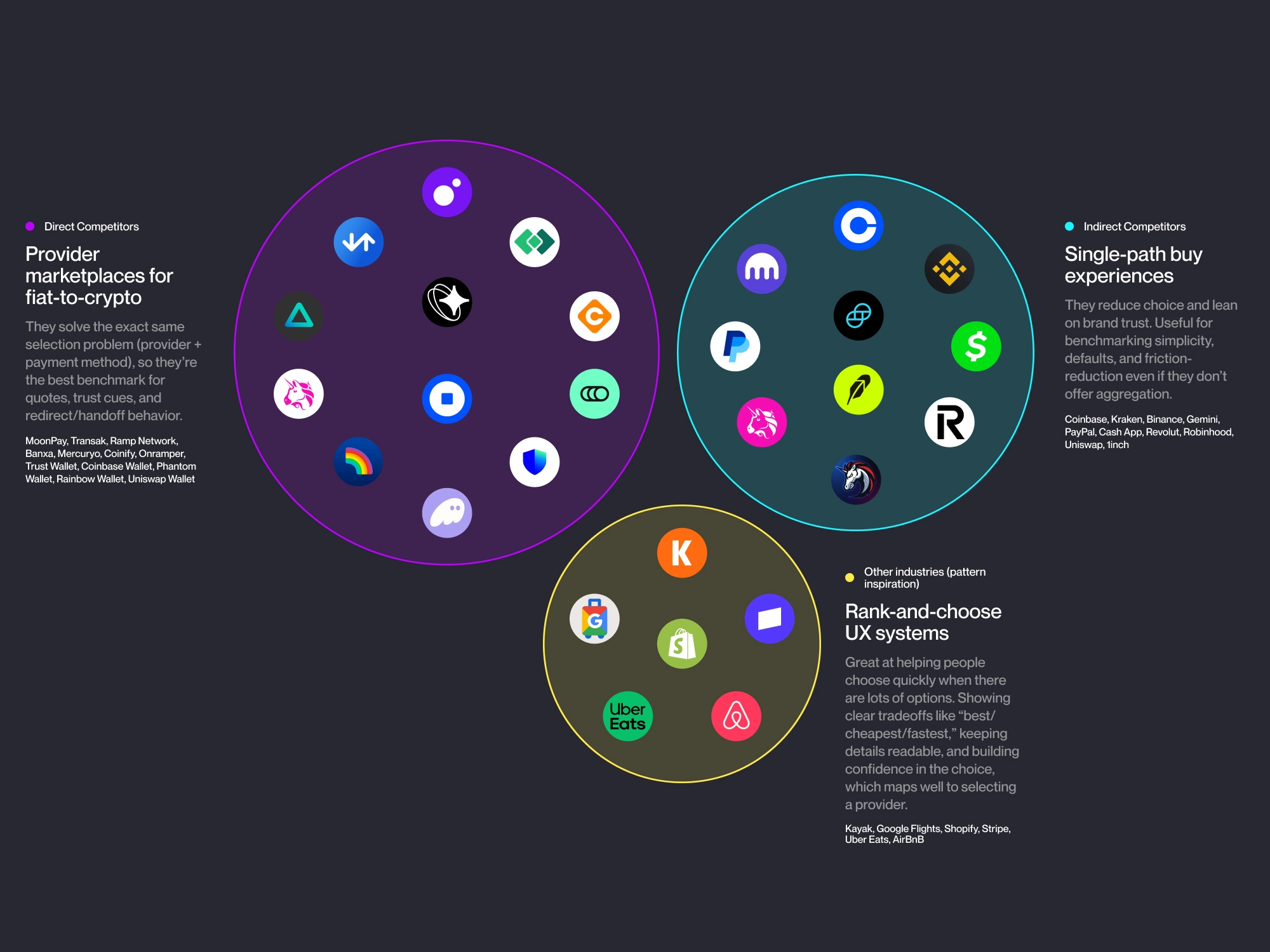
LOOKING BEYOND CRYPTO FOR BETTER WAYS TO CHOOSE
Alongside user interviews, I studied how similar products handled the decisions people make when buying crypto. Direct competitors helped us understand how providers, quotes, and handoffs were being handled, while simpler purchase experiences showed how reducing choice could make buying feel more straightforward. I also looked outside crypto at products built around comparing many options, borrowing familiar patterns for making tradeoffs clear, offering recommendations, and helping people choose with confidence.

Aligning the team before committing to the build
Before moving into detailed design, I worked closely with engineering to map an early version of the end-to-end purchase flow around the technical constraints of the MVP. Mapping the paths, decision points, and failure states gave design, engineering, and product a shared view of what we were building and where complexity needed to be resolved. It became a practical alignment tool: we could make tradeoffs together, get stakeholder buy-in earlier, and move into development quickly enough to test the experience before investing further.
FROM DIRECTION TO LAUNCH
We didn’t try to get everything right at once. We explored how the experience could work, tested the decisions that mattered most, and used what we learned to shape the first version we put into people’s hands. Once it was live, real behavior showed us where to go next.
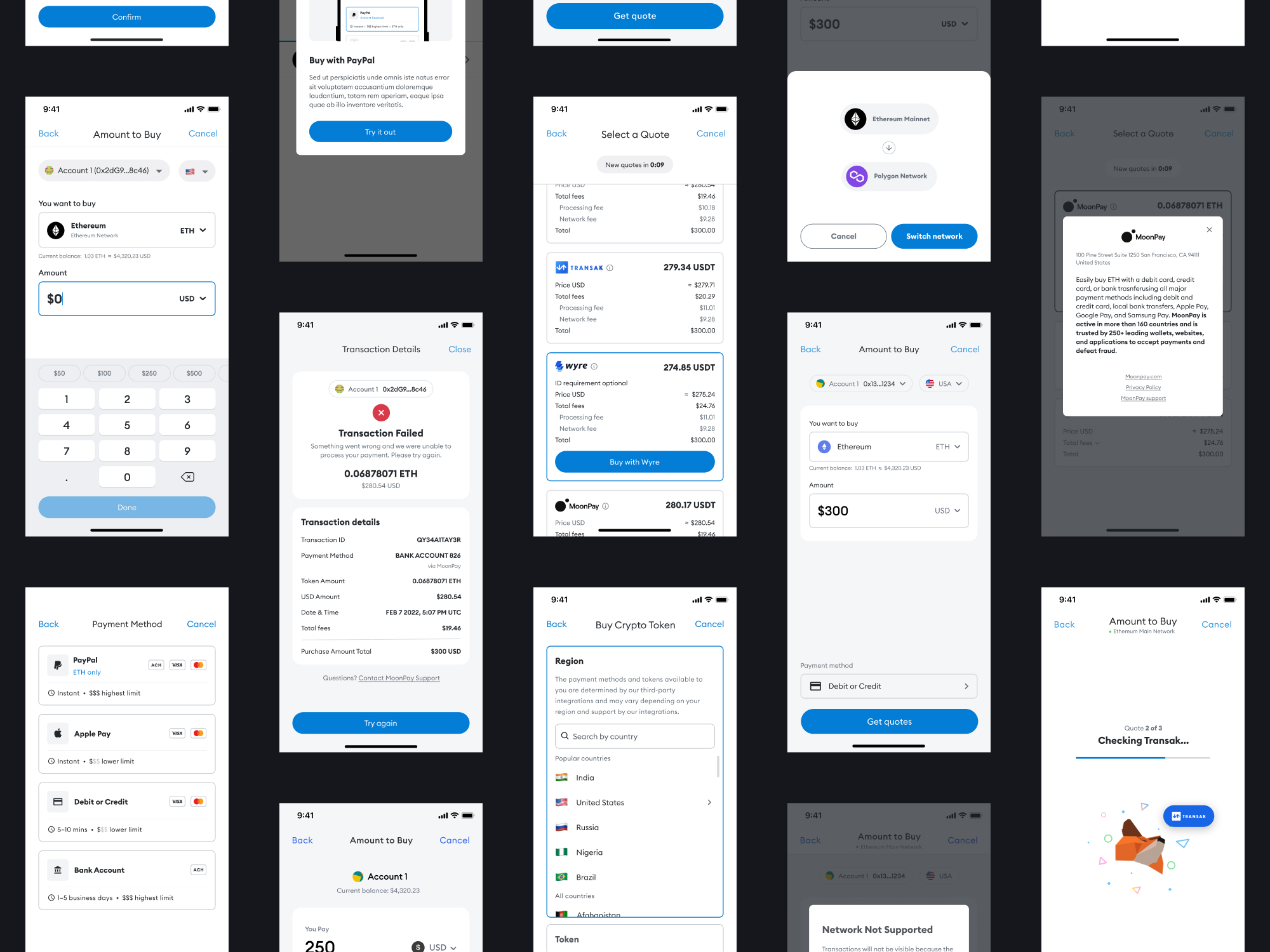
EXPLORING THE COMPLEXITY
Before settling on a direction, I explored different ways the Buy experience could be structured from end to end. I worked through different approaches to selecting an asset, entering an amount, choosing a payment method, comparing providers, and handling regional, network, and transaction constraints. These explorations helped us understand which decisions belonged together, what information people needed at each step, and where complexity could be reduced. From there, we narrowed the strongest ideas into a direction we could prototype and test with users.

TESTING THE DIRECTION BEFORE WE BUILT IT
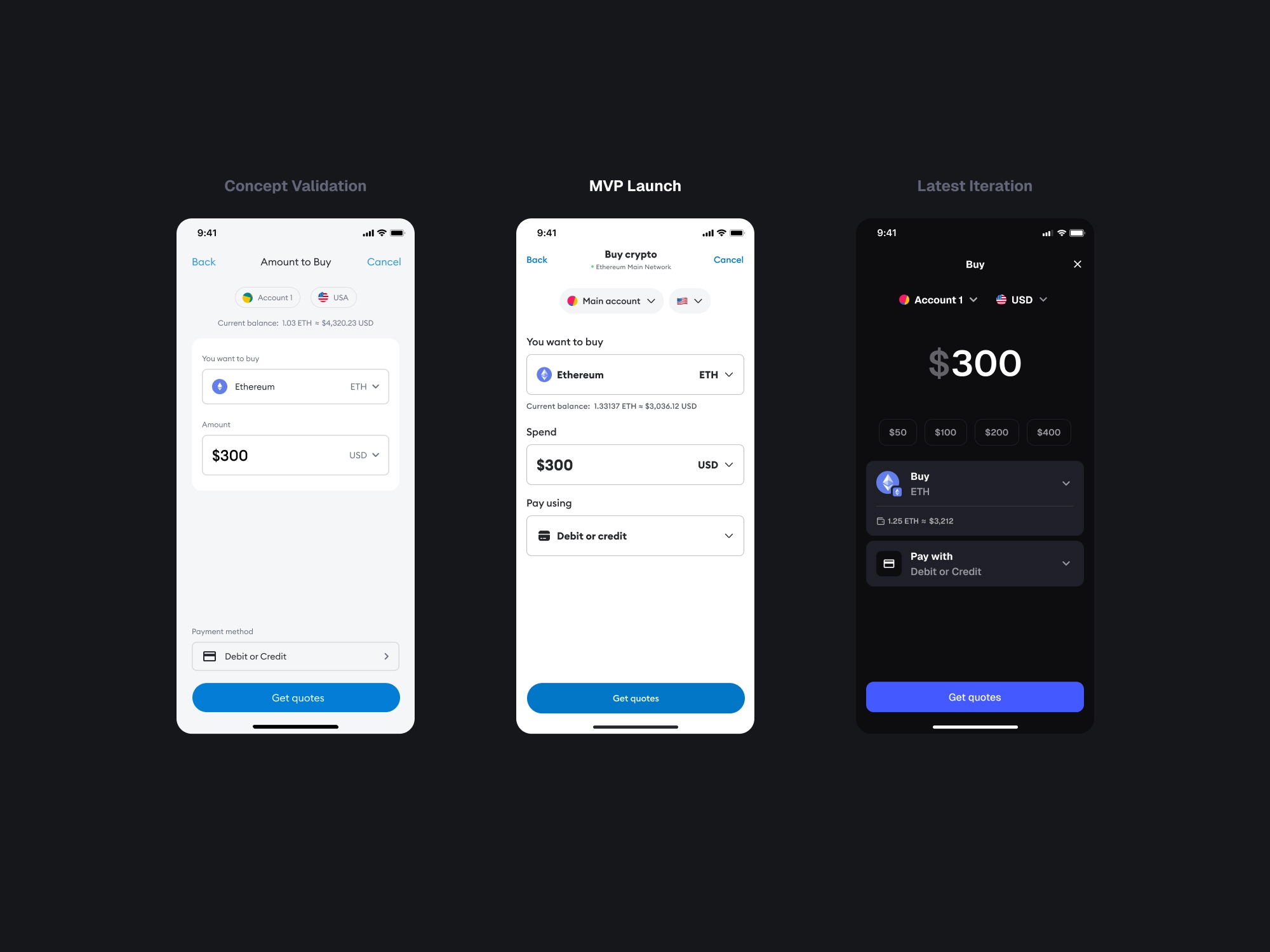
Once we aligned on the flow and visual direction, I built an interactive prototype to test the experience before committing it to development. We tested with 20 participants across the US, UK, Canada, Brazil, and Nigeria, spanning different levels of crypto experience. Participants worked through buying $300 of ETH, choosing a payment method, comparing providers, and continuing through the purchase. Watching where people hesitated, misunderstood their options, or needed more information helped us refine the experience and decide what needed to be included in the first MVP.
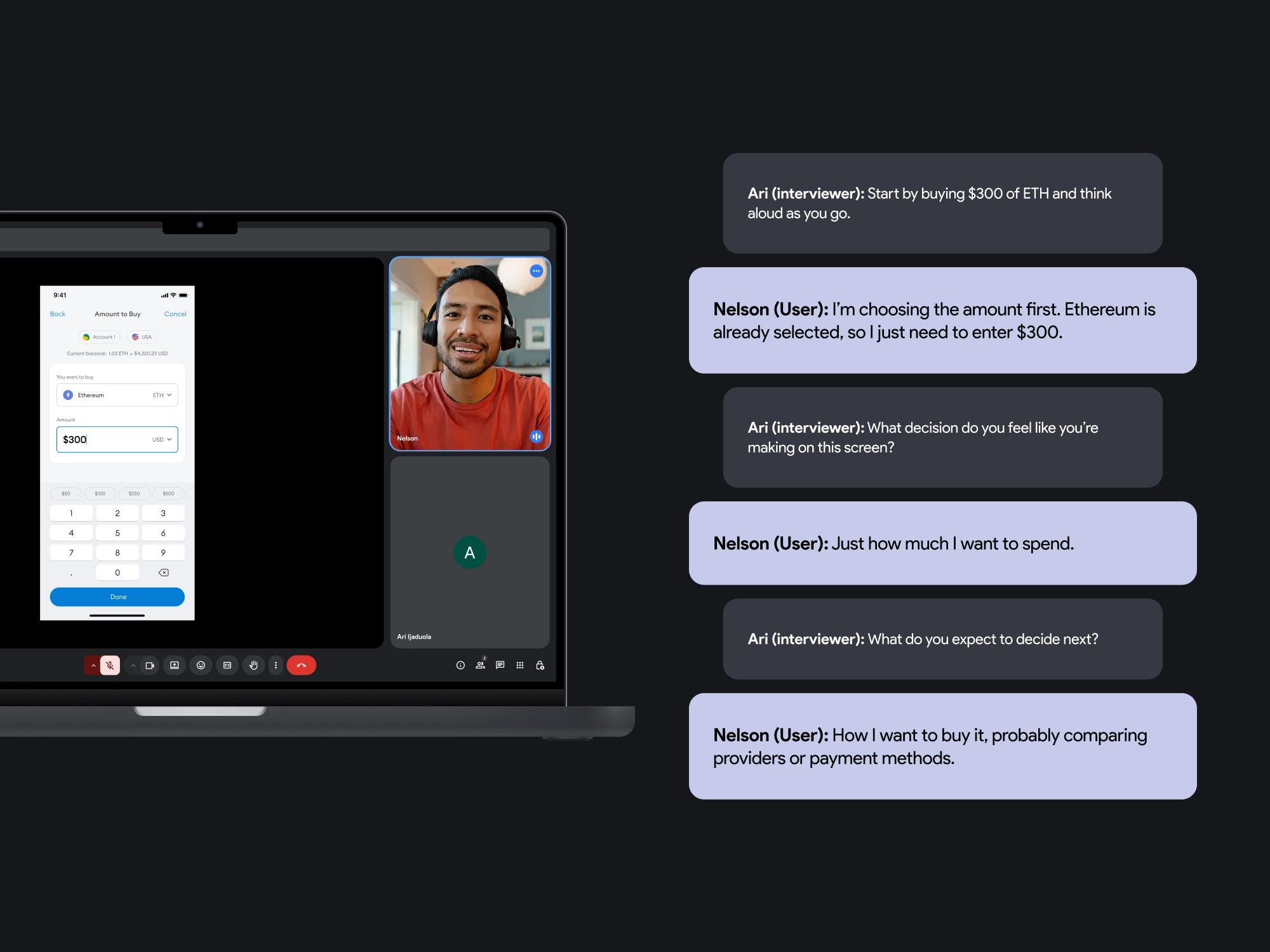
THE FLOW WAS WORKING. NOW WE KNEW WHERE TO FOCUS.
Most participants moved through the core purchase flow successfully and felt confident choosing a provider, giving us confidence in the overall direction. Where people struggled was more specific: understanding buy limits, making sense of fees, and knowing what to expect when leaving MetaMask. These findings helped us focus the MVP on making those moments clearer without reworking the overall flow.
TAKING THE FIRST VERSION LIVE
Moving from concept to MVP meant translating the validated experience into the realities of MetaMask’s existing architecture, design system, and third-party provider integrations. Working closely with engineering, technical constraints shaped how parts of the experience could be implemented, requiring us to adapt the interface while preserving the core interaction model we had validated with users. After launch, the experience continued to evolve as we learned from real-world behavior and the broader product and design system matured. While the interface changed over time, the fundamental structure established in the early work remained intact.
THE FINAL EXPERIENCE
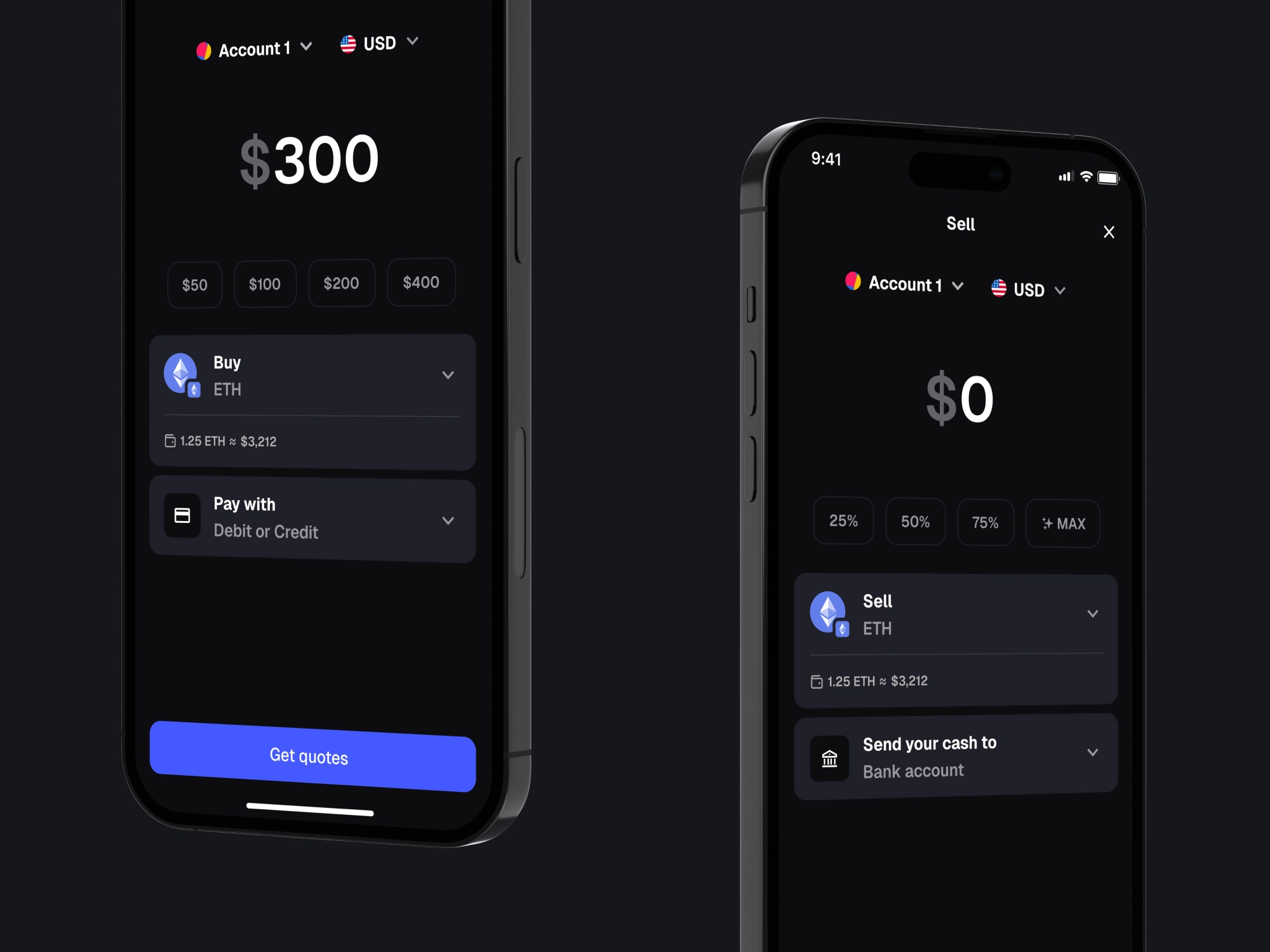
The final experience brought what we learned across each iteration into one clear journey, helping people understand their options, compare providers, and know what to expect along the way.
MAKING BUY & SELL PART OF THE WALLET
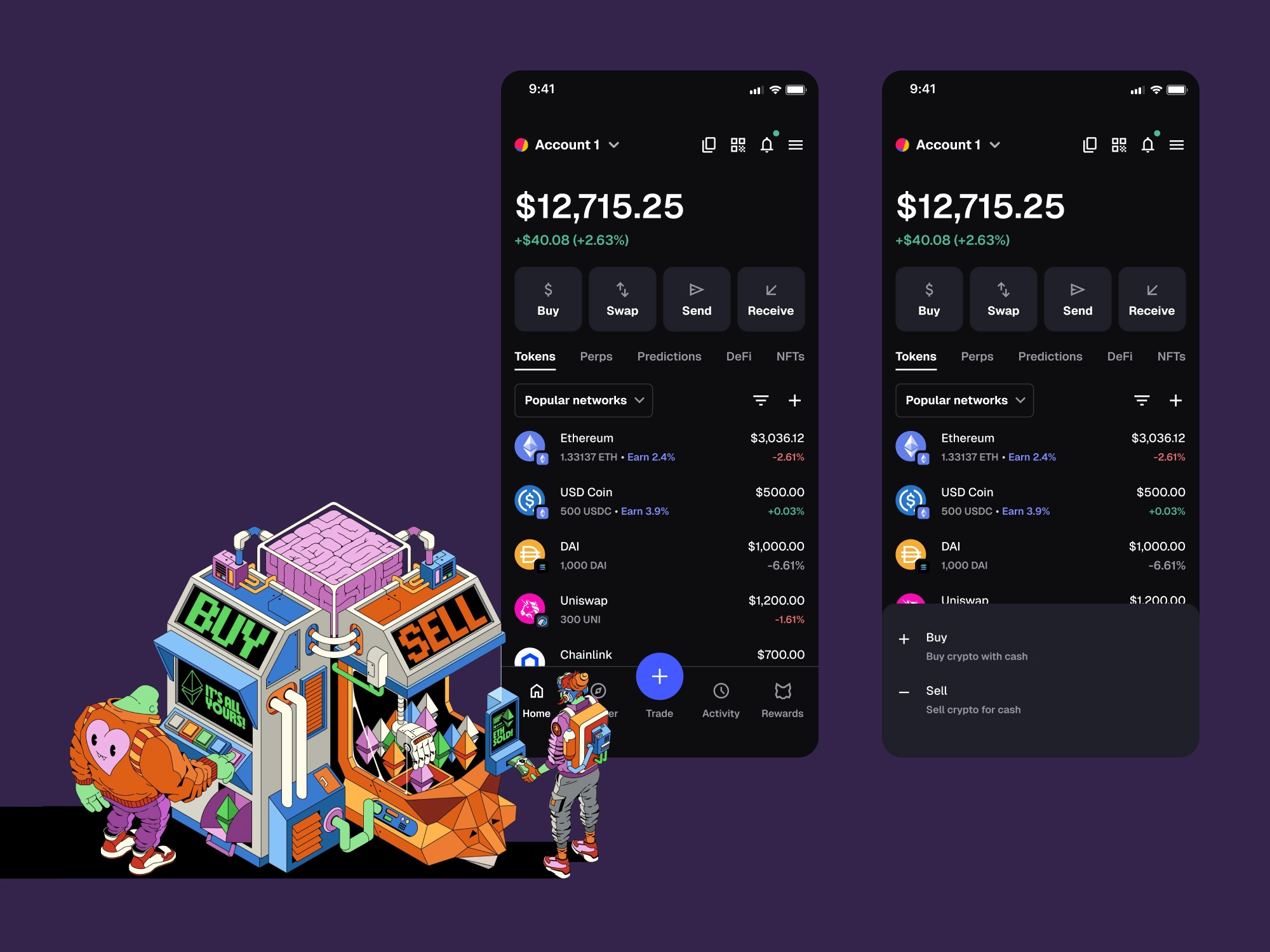
Buy & Sell became easier to access directly from the wallet, giving people a clear starting point whether they were purchasing crypto or cashing out. From there, the experience could guide them through the choices relevant to their transaction without asking them to understand everything happening behind the scenes.
LOCATION SHAPES WHAT’S AVAILABLE
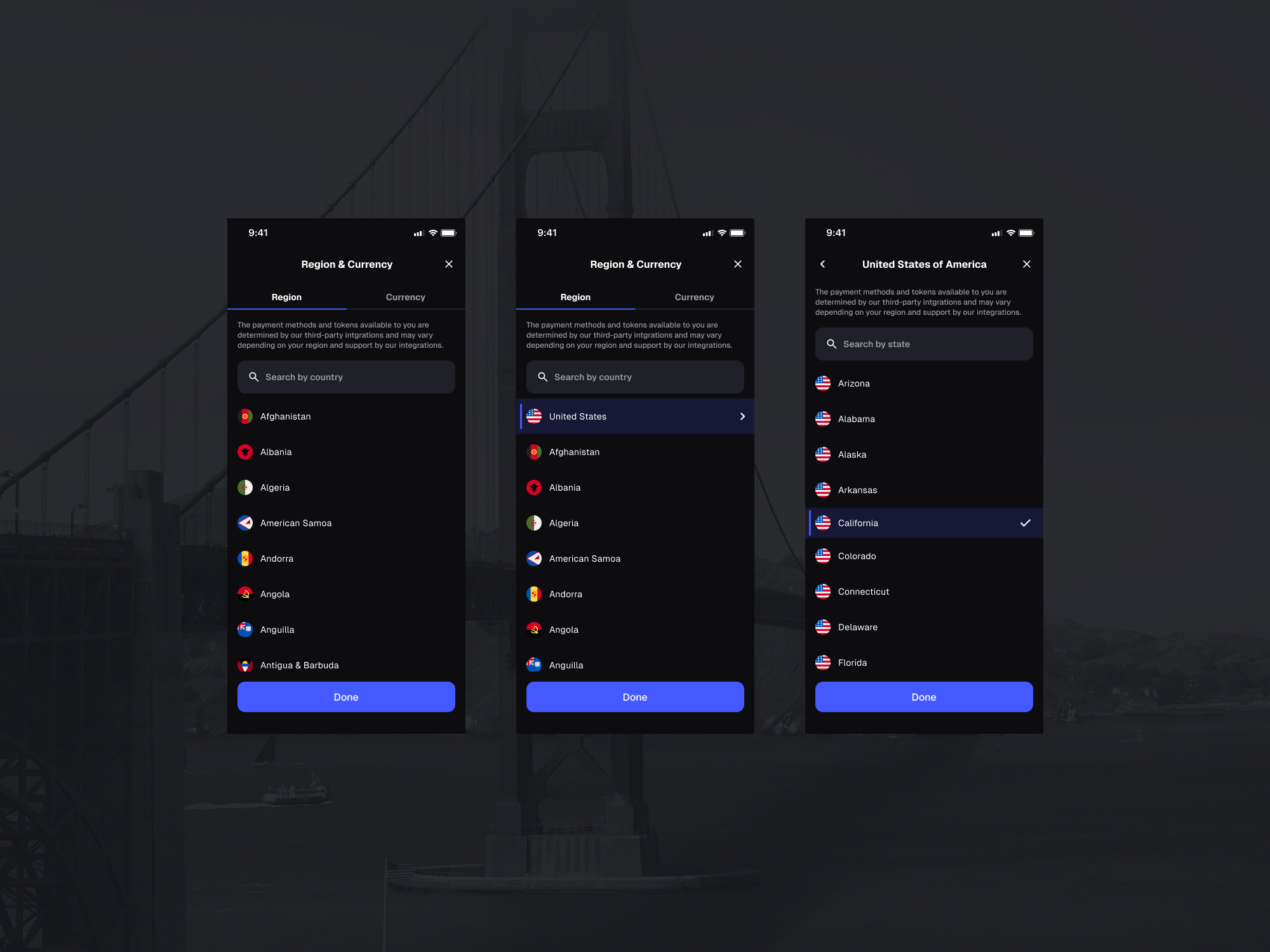
Where someone’s bank was located determined which providers, payment methods, and assets were available to them. We asked for region upfront the first time they used Buy & Sell, then used that selection to preselect the most common local currency while still allowing users to choose another. Their preferences were remembered for future purchases and could be changed at any point, keeping setup quick while ensuring the options shown throughout the experience were relevant from the start.
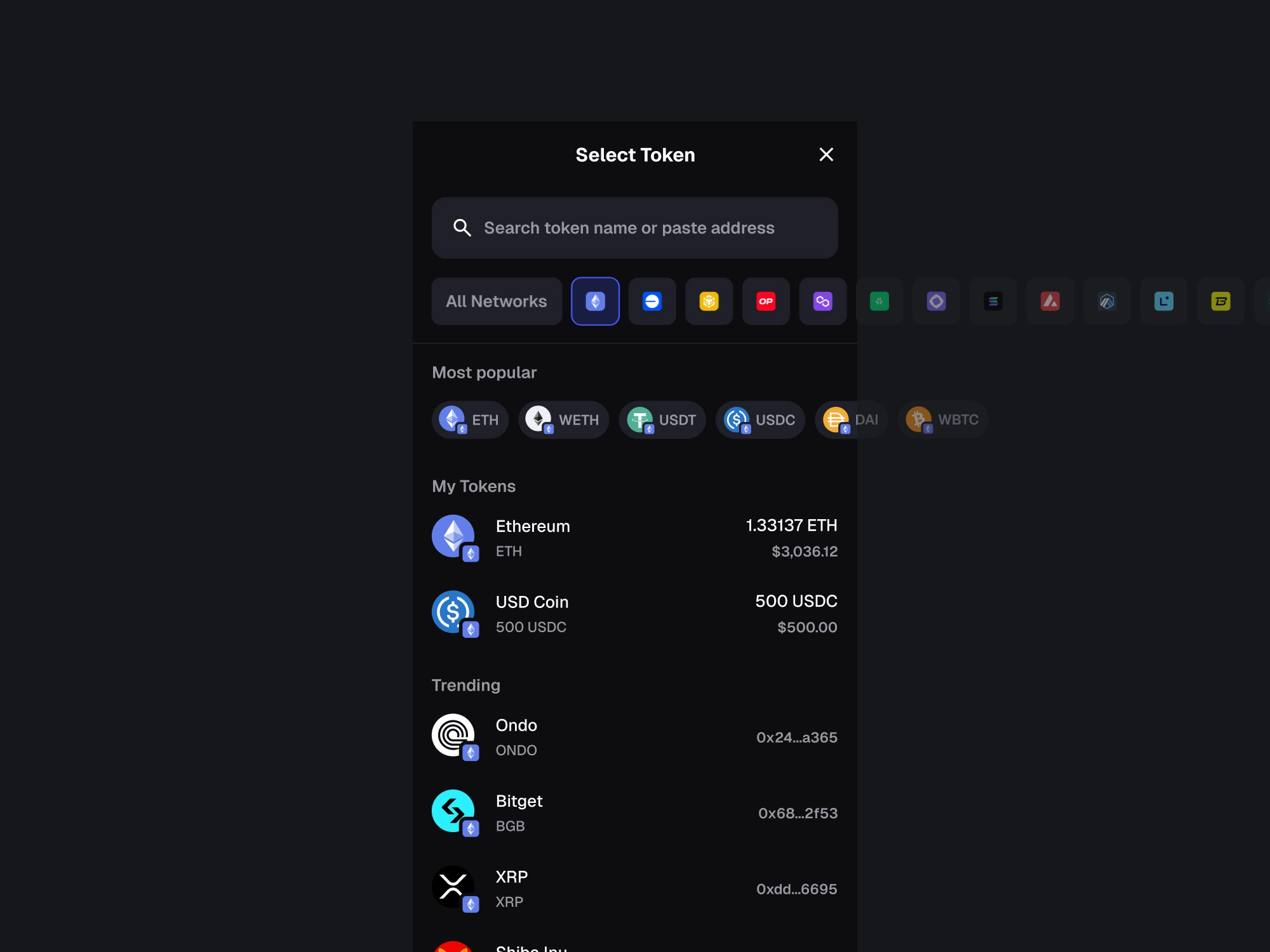
MAKING ASSET SELECTION EASY TO NAVIGATE
As Buy & Sell expanded across more assets and networks, token selection needed to scale without making that complexity the user’s problem. Search supported people who knew exactly what they wanted, while network filters, popular assets, existing holdings, and recognizable asset information created faster paths for everyone else. This gave users multiple ways to find the right token while keeping an expanding asset universe easy to navigate.
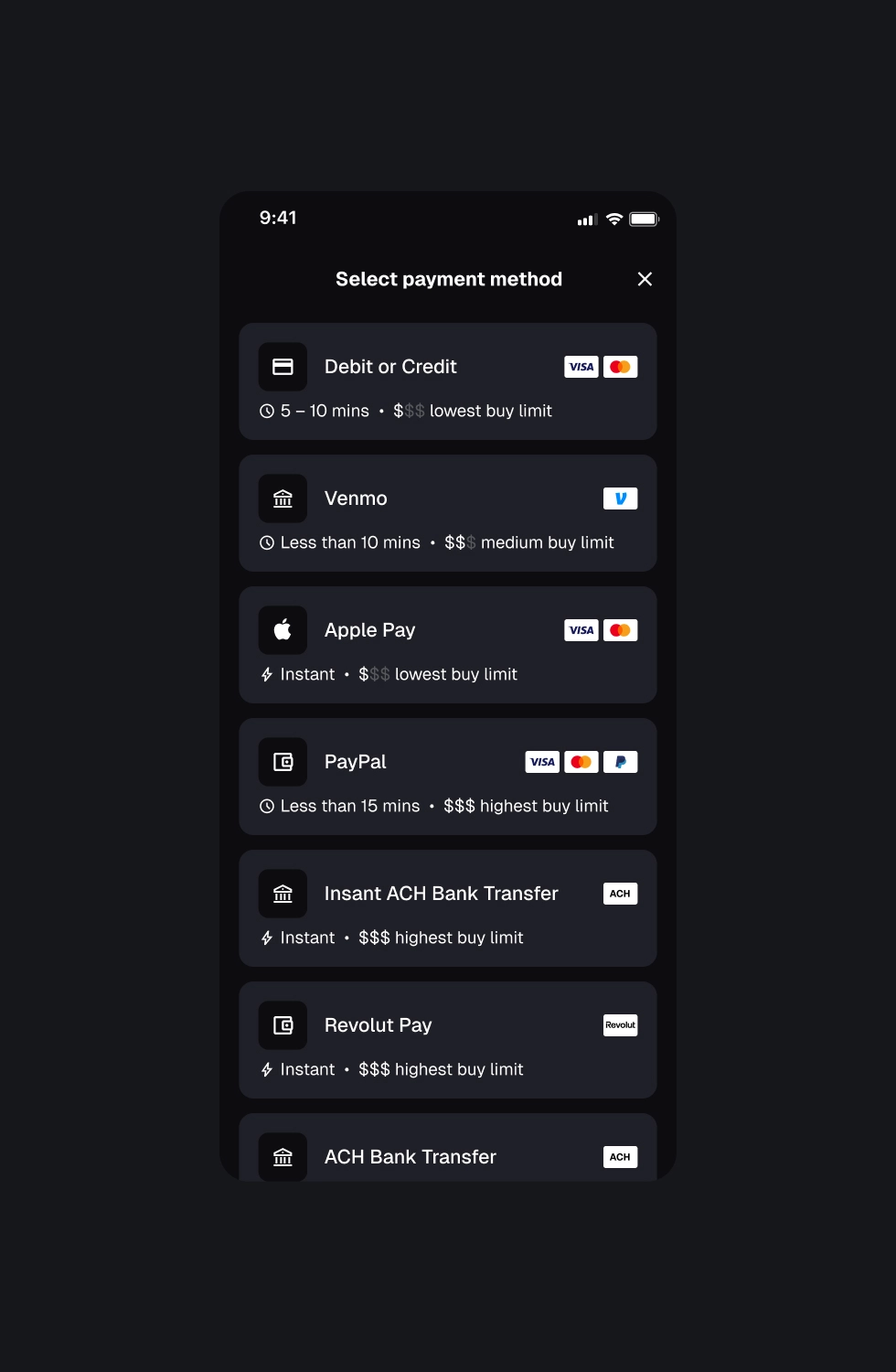
MAKING PAYMENT TRADEOFFS CLEAR
Payment methods could vary significantly by region and provider, with each option carrying different expectations around speed, purchase limits, and availability. Rather than presenting them as interchangeable choices, we brought those tradeoffs directly into selection, helping users understand what each method offered before moving forward. Their choice then narrowed the experience to relevant providers and quotes, reducing uncertainty later in the purchase.
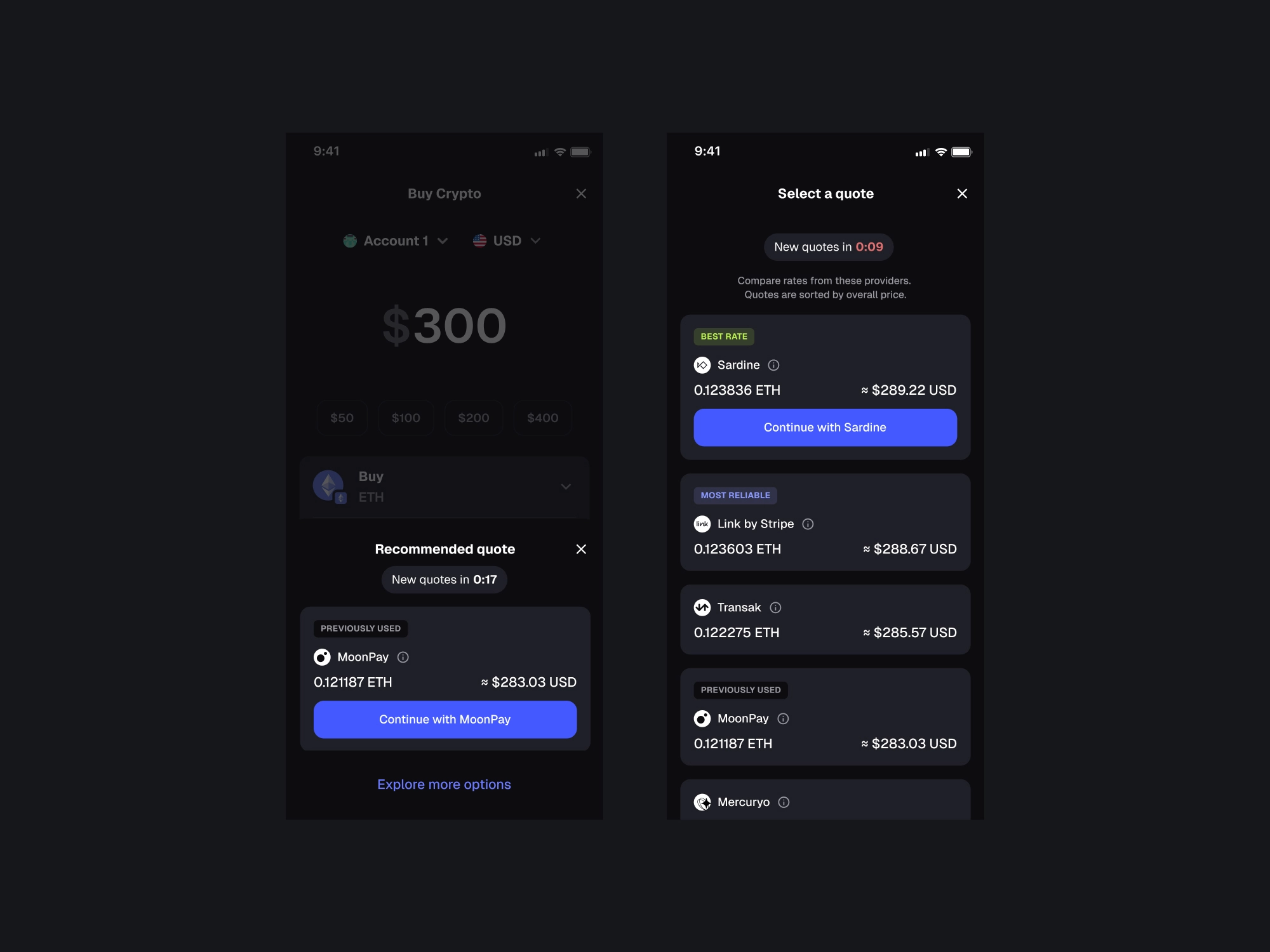
RECOMMENDING WITHOUT REMOVING CHOICE
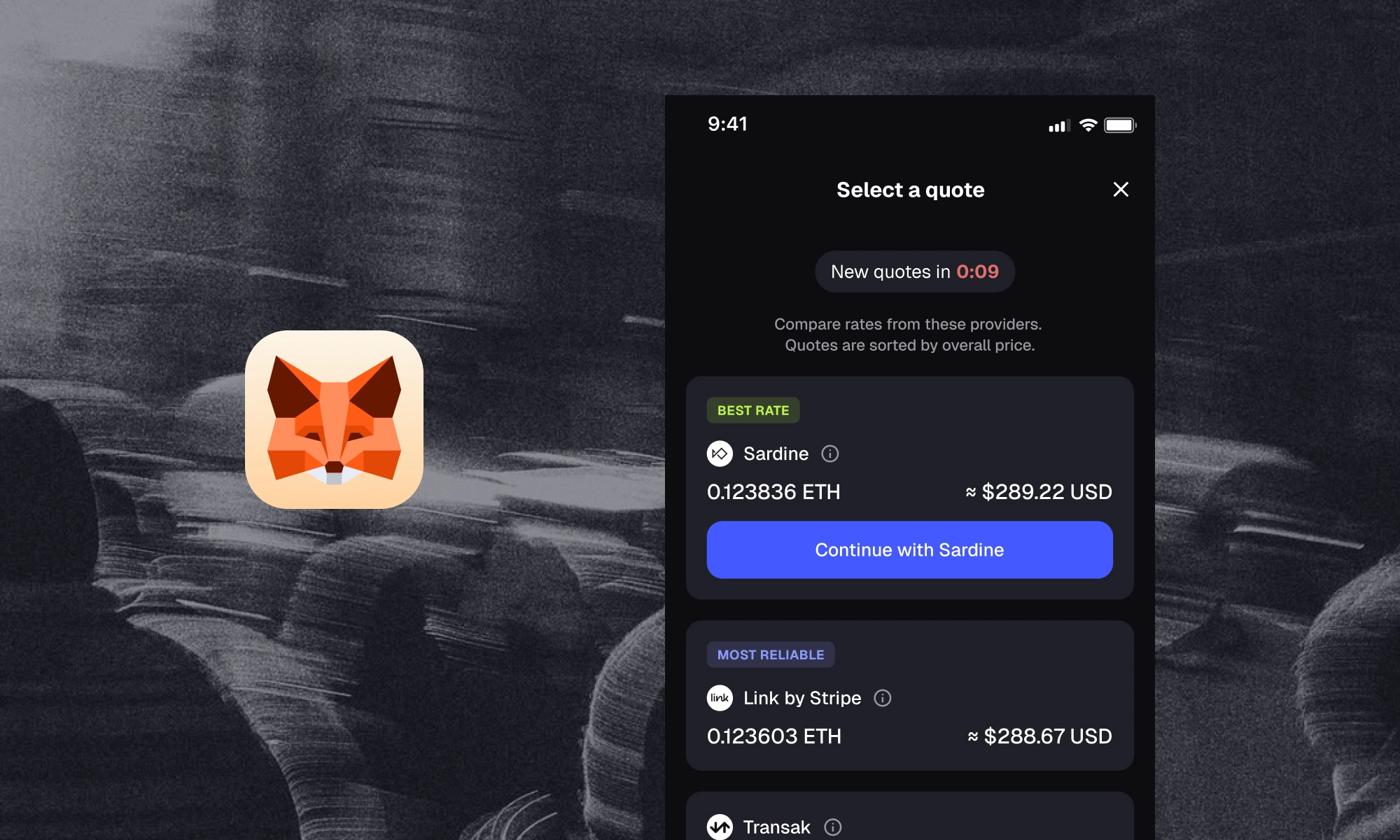
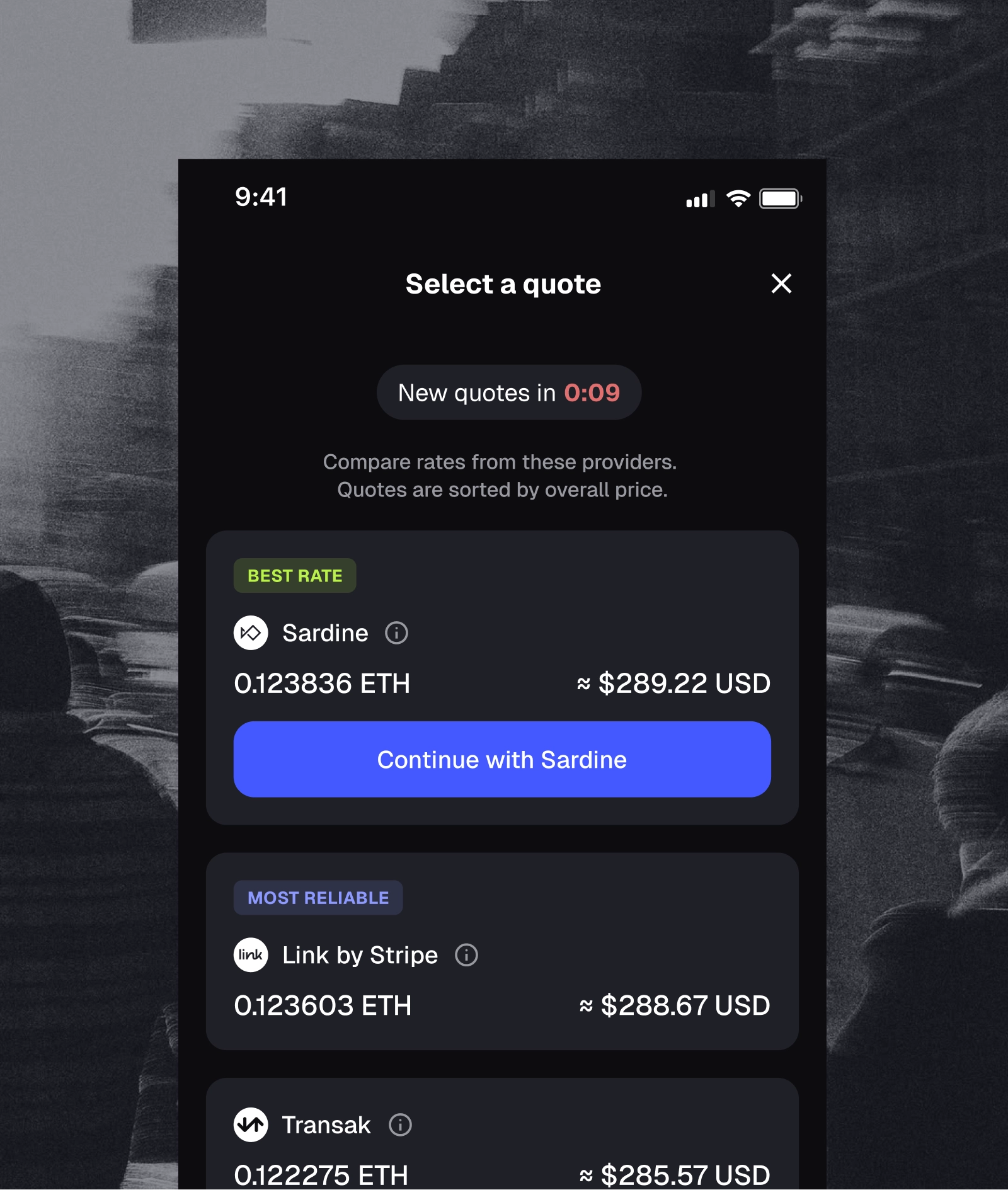
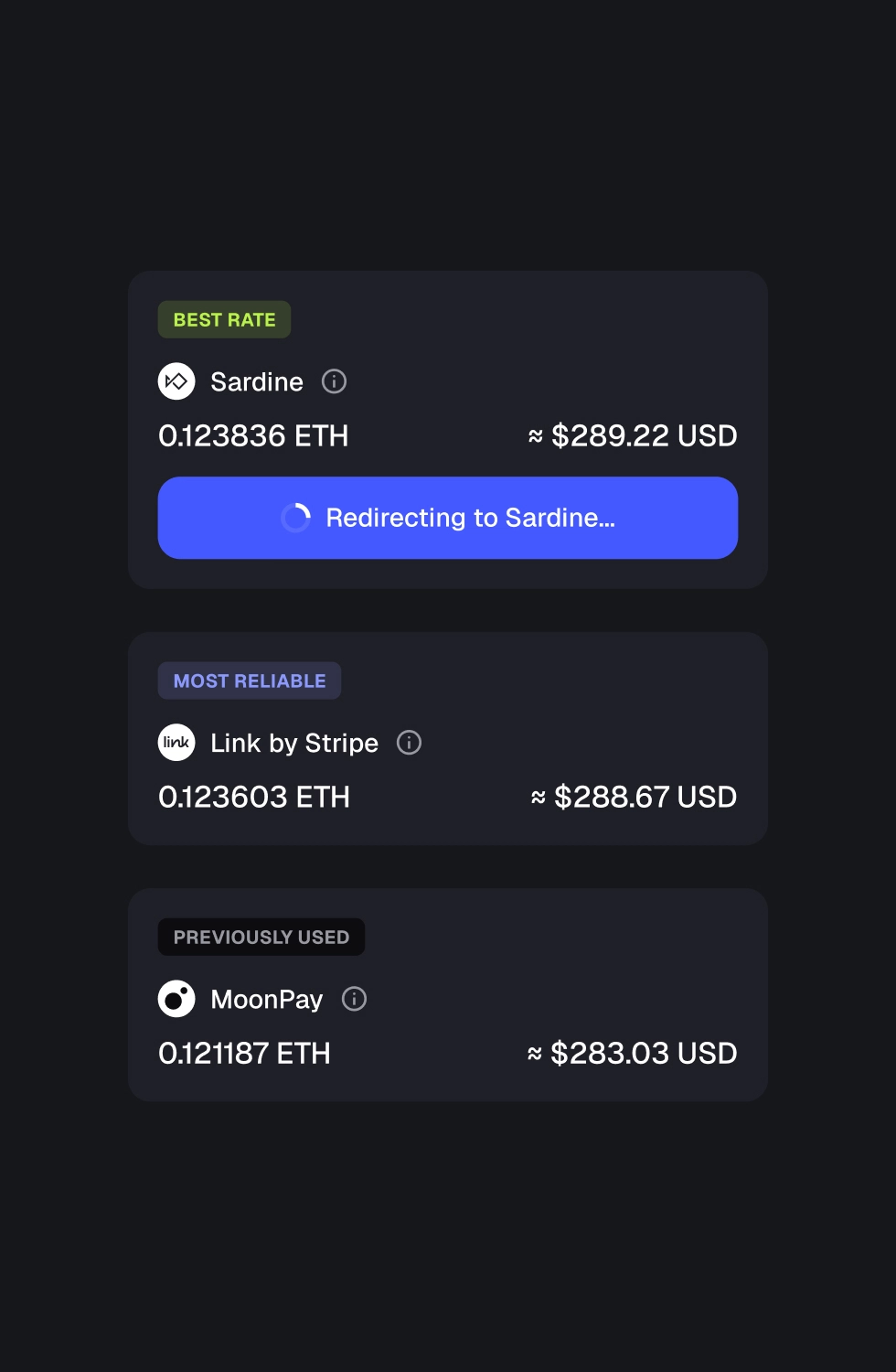
Comparing providers meant weighing more than price. Rates could change, providers varied in reliability, and familiarity could matter as much as getting the highest return. Rather than asking users to evaluate every quote equally, we recommended a strong option upfront while keeping the full marketplace one step away. Clear labels like Best Rate, Most Reliable, and Previously Used made meaningful tradeoffs easier to understand, while live quote refreshes and transparent values helped users choose with confidence.
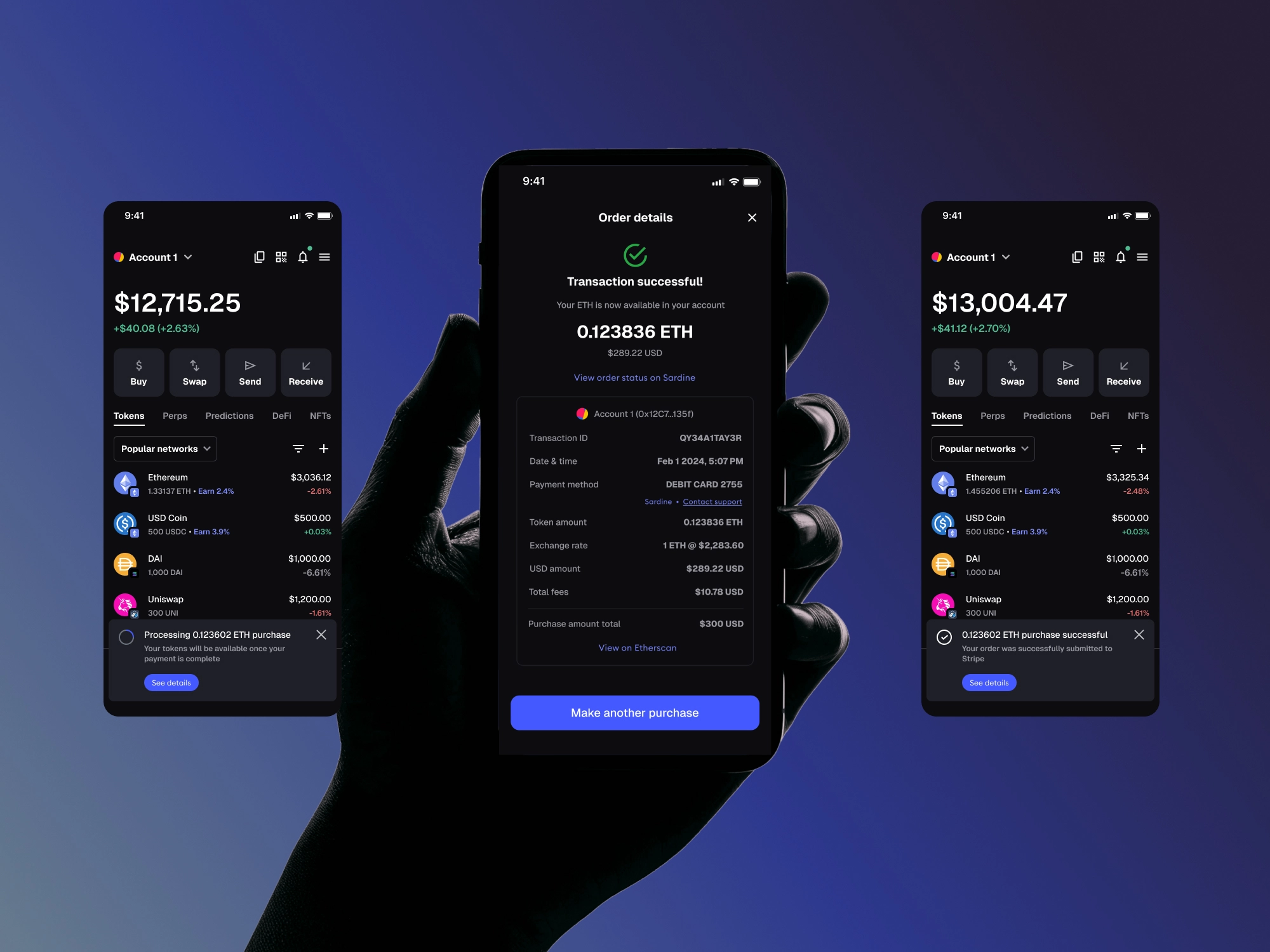
CLOSING THE LOOP AFTER PURCHASE
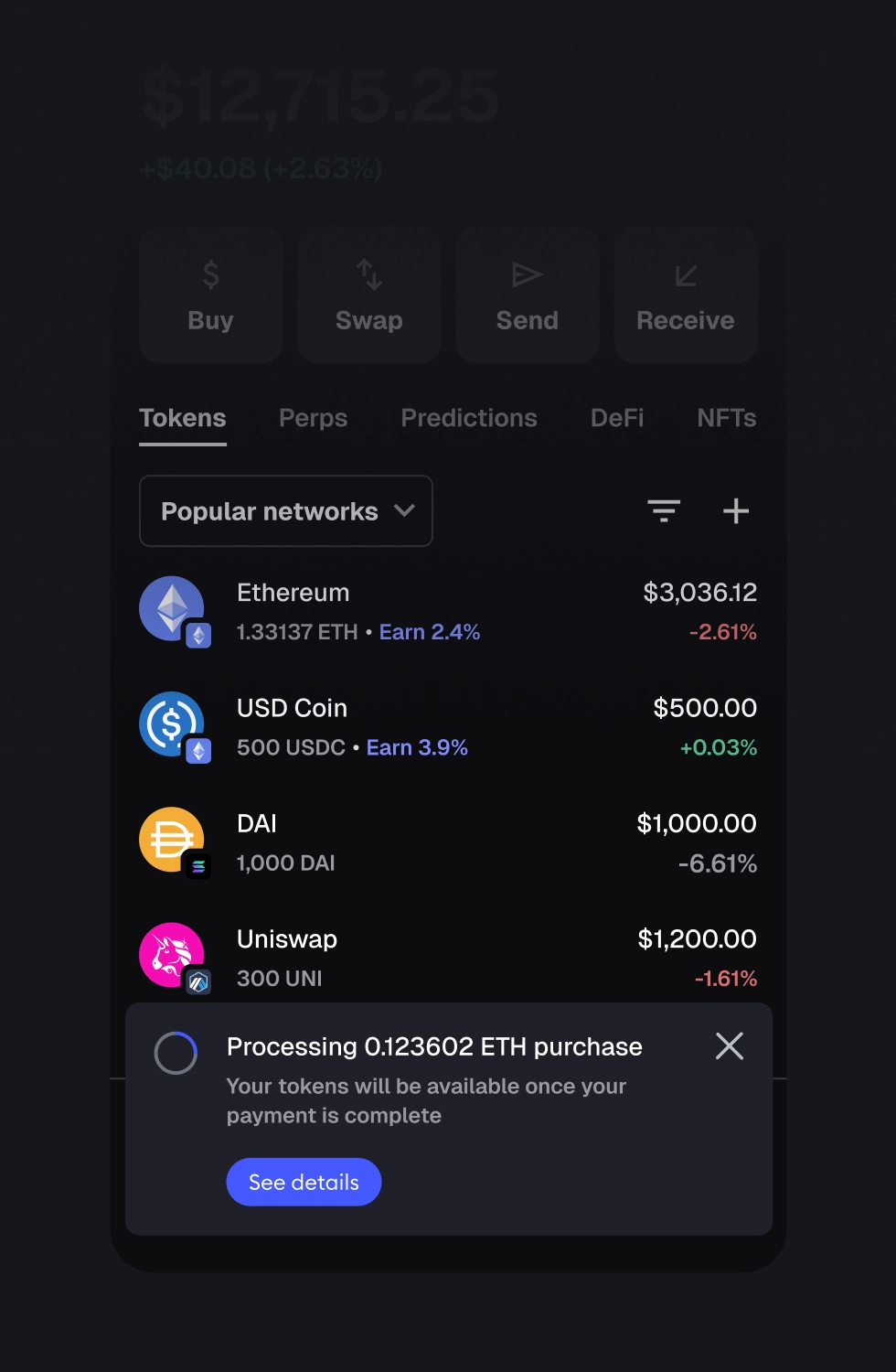
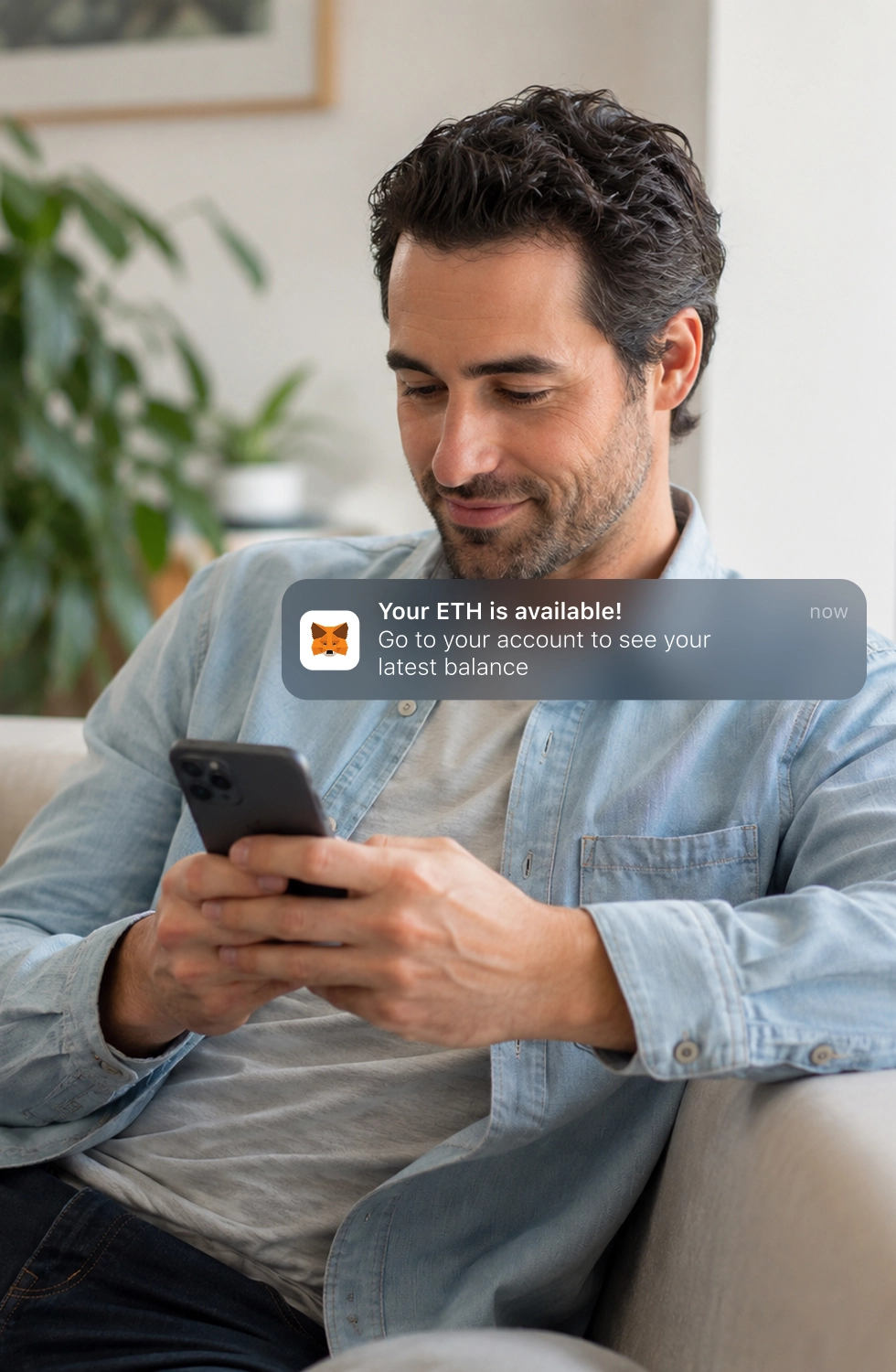
The experience didn’t end when users left MetaMask to complete their purchase. Persistent transaction states kept progress visible after the provider handoff, while notifications let users step away and know when their assets became available. At any point, they could return to detailed order information, provider support, or the blockchain record, maintaining continuity and trust through a part of the journey MetaMask didn’t fully control.
IMPACT & REFLECTION
Buy & Sell became a critical entry point into the MetaMask ecosystem. For users without crypto, purchasing an asset was often the step that unlocked everything that followed, from swapping and bridging to staking, sending, and interacting with dapps. That made the impact of this work larger than the transaction itself. I wasn’t simply designing a better way to buy crypto, but an experience that had to remain clear across markets, providers, payment methods, regulations, and user needs that could change over time. Leading this work changed how I think about scale: the most important experience isn’t always the one with the most features, but the one that unlocks access to everything around it.
MetaMAsk
Portfolio